Category: Blog

Setting Realistic Expectations on GLP-1 Programs: What the Medication Does — and What It Doesn’t

GLP-1 medications have generated extraordinary clinical and public interest — and for good reason. These are among the most effective pharmacological tools for metabolic health management ever developed. But media coverage, social media testimonials, and word-of-mouth accounts often diverge significantly from clinical reality. Understanding what GLP-1 programs actually deliver — and what they require from you — is the foundation of a successful treatment experience. The “Magic Pill” Misconception GLP-1 medications are not passive interventions. They address the hormonal drivers of appetite dysregulation and metabolic imbalance — but they do not override poor dietary choices, physical inactivity, or chronic stress. Patients who approach GLP-1 programs as standalone solutions consistently underperform compared to those who integrate the medication with meaningful lifestyle changes. The medication provides a hormonal foundation — reduced appetite, improved satiety signaling, better glycemic stability — that makes meaningful lifestyle change significantly easier than it is without medical support. But the work of building sustainable habits still falls to the patient. Those who achieve the most lasting results use the treatment window to develop dietary patterns and movement habits that can sustain their progress beyond the active treatment phase. Understanding GLP-1 Medication Options GLP-1 medications differ in their receptor targets, dosing schedules, and clinical efficacy profiles. Compounded semaglutide is a GLP-1 receptor agonist — it activates one hormonal receptor pathway. Compounded tirzepatide is a dual GLP-1 and GIP (glucose-dependent insulinotropic polypeptide) receptor agonist — it activates two receptor pathways simultaneously, which accounts for the greater average weight reduction seen in the SURMOUNT-5 trial (NEJM, 2025). Both medications share a similar GI side effect profile and are administered as weekly subcutaneous injections. Your licensed CoraDoc provider determines which medication is appropriate based on your health history, metabolic profile, prior treatment experience, and goals. There is no universally superior option — there is the option most appropriate for your individual health profile. Honest Side Effect Expectations Gastrointestinal side effects — nausea, constipation, diarrhea, abdominal discomfort — are common during the initial weeks of GLP-1 treatment and during dose escalations. For most patients, they are also temporary. Understanding that these symptoms are expected and transient helps patients avoid premature discontinuation during the most critical phase of treatment. The weight loss plateau that many patients experience after several months is equally misunderstood. When body weight stabilizes, the medication has not stopped working — it is performing its other critical functions: maintaining blood sugar regulation, supporting satiety, and preserving the metabolic improvements achieved during the active weight loss phase. Discuss any concerns about your progress with your CoraDoc provider before making changes to your program. Individualizing Your Program Titration at Your Pace GLP-1 titration is not a race. Starting at a low dose and increasing gradually over several weeks is the clinical standard — and patients who follow their prescribed titration schedule experience meaningfully fewer GI side effects and better long-term adherence than those who self-advance prematurely. If you are experiencing significant discomfort at your current dose, discuss temporarily holding the dose increase with your CoraDoc provider until your body adapts more fully. This is a clinically sound approach, not a setback. Personalized Dietary Guidance GLP-1 medications reduce appetite — they do not guide food quality. What you eat within your reduced caloric intake matters significantly. Adequate lean protein (0.7–1.0 g per pound of body weight daily) preserves muscle mass during weight loss. Non-starchy vegetables provide essential fiber and micronutrients. Whole grains provide sustained energy. Generic dietary advice rarely translates to sustainable individual practice — work with your provider to develop an eating pattern that fits your schedule, food preferences, and metabolic needs. Lifestyle: The Multiplier That Determines Long-Term Outcomes Exercise and Muscle Preservation Physical activity is not optional in a well-designed GLP-1 program. Resistance training specifically is critical for preserving lean muscle mass during weight loss — without it, the body loses muscle alongside fat, which slows resting metabolic rate and makes long-term weight maintenance significantly harder. Even 2–3 resistance training sessions per week combined with daily moderate activity produces meaningful improvements in body composition and metabolic outcomes. Build intensity gradually, particularly during the GI adjustment period. Food Noise: An Underrecognized Benefit One of the most consistently reported transformative effects of GLP-1 therapy is the reduction of “food noise” — the persistent mental preoccupation with eating, cravings, and food that characterizes metabolic dysregulation. For many patients, this is the first meaningful relief from compulsive food-related thinking they have experienced. This window represents a meaningful opportunity to establish more intentional, nourishing eating patterns while appetite regulation support is strongest. Protein and Nutritional Status A significant risk in GLP-1 programs is under-consumption of protein and micronutrients as appetite decreases. Appetite suppression reduces quantity — but nutritional quality requires deliberate attention. Patients who do not proactively target adequate protein intake risk muscle loss during the weight loss phase, which reduces resting metabolic rate and complicates long-term maintenance. Your CoraDoc provider can establish minimum nutritional targets for your program during your free consultation. Long-Term Success: Building Beyond the Active Phase The most successful GLP-1 program patients are those who treat the medication as the beginning of a metabolic transformation — not the entire process. The medication provides the hormonal foundation. The lifestyle habits built during treatment determine whether results are sustained afterward. Obtaining GLP-1 medications from unregulated or non-clinical sources carries significant safety risks — counterfeit or incorrectly dosed medications are a documented problem in the marketplace. CoraDoc medications are dispensed through DIRX, a licensed U.S. pharmacy, under the supervision of board-certified physicians. All programs are LegitScript certified. If you are experiencing cost or access concerns, contact CoraDoc’s care team directly at 855-983-5336 for guidance on options available to you. Frequently Asked Questions What if I feel like the medication isn’t working? Contact your CoraDoc provider. Perceived ineffectiveness is often a dose issue — the therapeutic dose for meaningful appetite regulation may not have been reached yet if you are still in the titration phase. Your provider can assess your current dose, review adherence and lifestyle
Read More
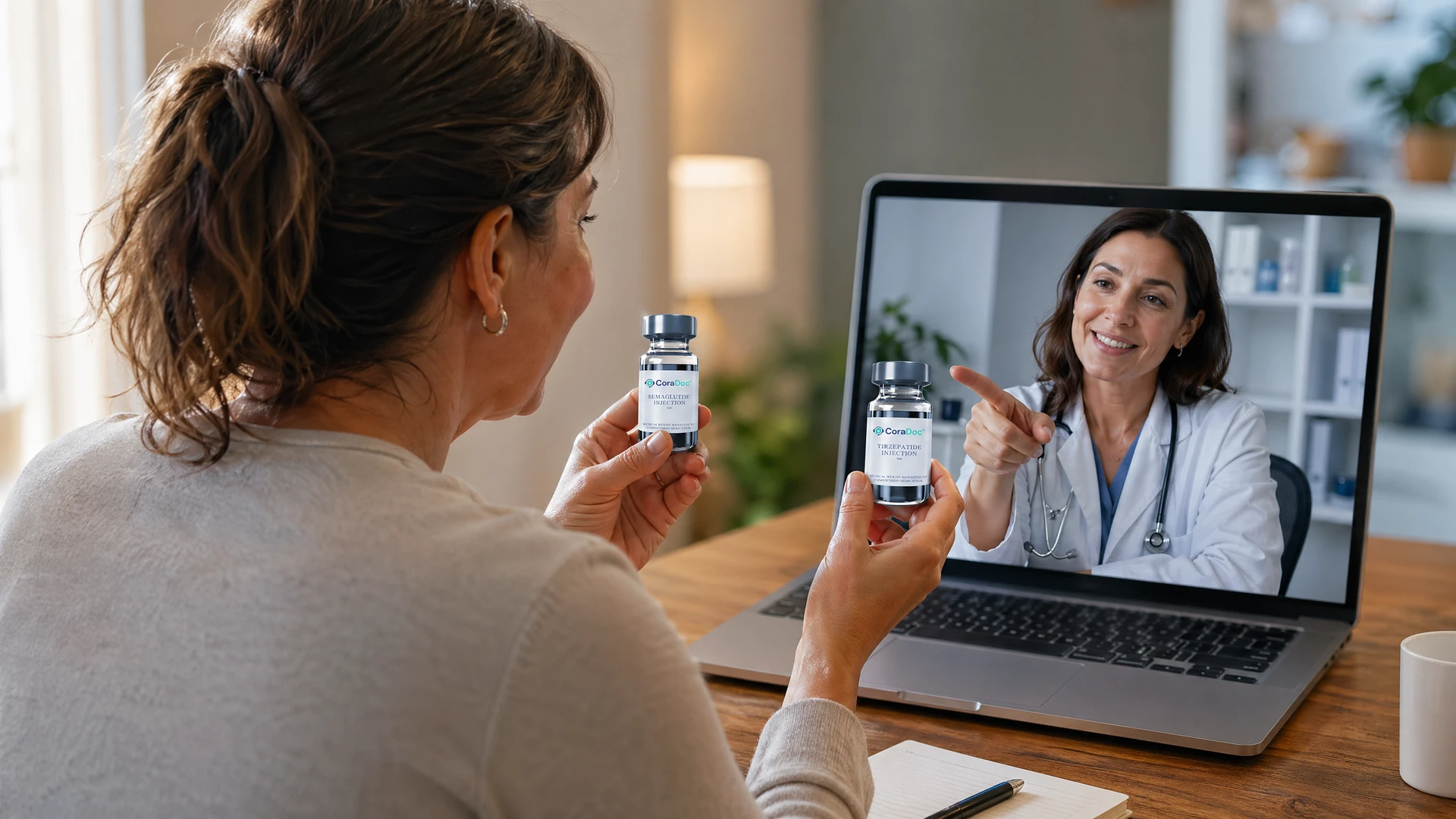
Online telehealth visit with licensed provider for GLP-1 weight loss program

Semaglutide and Tirzepatide: Do They Arrive Warm? How Long Are They Good for After 21 Days?

Understanding Tirzepatide Storage Requirements LegitScript Talk to a Board-Certified Doctor Free consultation. 15,000+ patients. From $99/month ✓ Free visit ✓ Free shipping ✓ Free supplies Start Free Consultation → Affirm. Klarna. Afterpay. HSA/FSA When you get your Tirzepatide, whether it’s Mounjaro or Zepbound, the first thing to know is that it really likes the cold. Keeping it in the refrigerator is the best way to make sure it stays good until the date printed on the box. The ideal spot for it is between 36°F and 46°F. Think of it like keeping your milk fresh; the fridge is its happy place. This temperature range helps maintain its stability and effectiveness over time. It’s also a good idea to keep it in its original packaging. That box isn’t just for show; it helps protect the medication from light, which can also affect how well it works. Before you use any dose, take a quick look. The liquid should be clear, maybe a little bit yellow, but definitely not cloudy or with anything floating in it. If it looks off, don’t use it. Tirzepatide Stability Outside Refrigeration Join 15,000+ Patients Check eligibility in under 10 minutes No insurance No fees All 50 states Begin Free Quiz → Affirm. Klarna. HSA/FSA. 0% APR So, what happens if you can’t keep your Tirzepatide in the fridge all the time? It turns out, it’s not the end of the world, but you do need to be mindful. The medication can hang out at room temperature, as long as it stays below 86 degrees Fahrenheit. For a period of up to three weeks, it should be just fine. Think of it like this: if you’re going on a short trip and can’t bring a cooler, you’ve got a window of about 21 days to keep it with you. However, there’s a pretty important rule here – once it’s been out of the fridge, you can’t put it back in. So, if you take it out, you need to use it within that 21-day timeframe or toss it. Leaving it out for longer than that, or if the temperature creeps above that 86-degree mark, could mean the medicine just doesn’t work as well as it should. The active ingredients can start to break down, and you don’t want that. If you’re ever unsure if it got too warm or how long it’s been out, it’s always better to be safe than sorry and talk to your doctor or pharmacist. Handling Tirzepatide After Room Temperature Exposure Medical Care from $99/Month Semaglutide and tirzepatide programs Triple free promise All 50 states Licensed doctors View All Programs → Affirm. Klarna. Afterpay. HSA/FSA accepted So, what happens if your Tirzepatide pen or vial accidentally spends a bit too much time out of the fridge? It’s a common worry, and honestly, it’s good to be aware of the rules. The main thing to remember is that Tirzepatide can hang out at room temperature, as long as it’s not warmer than 86°F (that’s about 30°C), for a total of 21 days. If it’s been out for that long, or if you suspect it got too warm, you can’t just pop it back in the fridge and pretend it’s all good. Once it’s been exposed to room temperature for that 21-day window, you need to use it within that time or get rid of it. Putting it back in the fridge doesn’t reset the clock, and it might not be as effective if it’s been compromised. If you’re ever unsure about how long it’s been out or if it got too hot, it’s always best to play it safe. Don’t use it, and reach out to your doctor or pharmacist to figure out the next steps. They can help you get a replacement if needed. Also, keep an eye out for any changes in how the medication looks – if it’s cloudy or discolored, that’s another sign to avoid using it, even if it hasn’t technically expired. Travel Considerations for Tirzepatide LegitScript Get Started in 3 Simple Steps Intake. Doctor consult. Free delivery. 1 10-min intake 2 Free video visit 3 Free delivery Start Free Consultation → Join 15,000+ patients. Affirm. Klarna. HSA/FSA When you’re planning a trip, especially one that involves flying, thinking about how to pack your Tirzepatide is pretty important. You definitely want to keep it safe and effective, right? So, keeping your medication with you in your carry-on bag is the way to go. Checked luggage can get lost, or worse, end up in places where the temperature can get really extreme, either too hot or too cold. Since Tirzepatide can handle being out of the fridge for up to three weeks, as long as it stays below 86°F, it’s usually fine for most trips. Just make sure it’s not sitting in a hot car or out in direct sunlight for too long, because that heat can mess with the medicine. If you’re traveling internationally, it’s a good idea to check the rules for the countries you’re visiting regarding bringing in medications, especially injectables. Sometimes, having a note from your doctor can be helpful, and keeping the medication in its original packaging with the pharmacy label is always a smart move. It just makes things smoother if you have to go through security or customs. The Significance of Expiration Dates Start Free Quiz. $99/Month Free visit. Free shipping. 15,000+ patients trusted Get Started Risk-Free → Affirm. Klarna. Afterpay. HSA/FSA. LegitScript Everything has a shelf life, and that includes your tirzepatide injections. You’ll see an expiration date printed on the packaging, and that’s not just a suggestion. It’s basically the manufacturer’s promise that the medicine will work as intended and stay stable, but only if you’ve kept it stored properly. Think cool temperatures, away from light, and never frozen, all while it’s in its original box. Once that date passes, the game changes. Manufacturer’s Guarantee and Storage Conditions The expiration date is tied directly to how the medication is stored.
Read More
Female doctor reviewing GLP-1 telehealth treatment plan for patients

GLP-1 Program Comparison: Costs, Benefits & What to Look For in 2026

LegitScript Certified · All 50 States · From $99/Month GLP-1 Program Comparison 2026: Costs, Benefits & What Actually Matters Choosing the right GLP-1 program is about more than price. Here is what to compare and why CoraDoc’s one-time payment model changes the math. See CoraDoc Pricing The GLP-1 Cost Landscape in 2026 GLP-1 medications have transformed metabolic health treatment. The STEP 1 trial (NEJM 2021) and SURMOUNT-5 trial (NEJM 2025) established clinically meaningful outcomes. But for most patients paying out of pocket, access has remained a cost barrier. Brand-name GLP-1 medications often cost $800–$1,200/month without insurance. Compounded GLP-1 options from telehealth platforms range from $75 to $399+/month — with significant variation in what’s actually included in that price. The 5 Most Important Things to Compare 1. All-In Cost vs. Advertised Price Platforms often advertise low medication prices but charge separately for consultation, shipping, and supplies. CoraDoc’s pricing is all-inclusive: $99/month for the 6-month semaglutide program includes the provider visit, medication, free 2-day shipping via DIRX pharmacy, and all supplies. No add-ons. 2. Subscription vs. One-Time Payment Monthly subscription billing creates a recurring financial decision point that causes early discontinuation. CoraDoc charges once per program — no auto-renew, no ongoing billing relationship. If you want to continue, that’s a new decision and new purchase. 3. LegitScript Certification LegitScript certification requires independent verification of prescribing practices, pharmacy standards, and legal compliance. Most GLP-1 telehealth platforms do not hold it. CoraDoc does. In 2026, multiple platforms received FDA warning letters for non-compliant practices. LegitScript-certified providers are held to ongoing verified compliance standards. 4. Real Physician Oversight GLP-1 prescriptions require genuine individual physician review — not algorithmic auto-approval. Every CoraDoc patient intake is reviewed by a board-certified physician before any prescription is issued. Your provider remains accessible throughout your program. 5. Pharmacy Sourcing Compounded GLP-1 medications should come from a licensed U.S. 503A compounding pharmacy under FDA oversight. CoraDoc’s pharmacy partner is DIRX, a licensed U.S. compounding pharmacy. Avoid providers who are vague about sourcing. 2026 GLP-1 Provider Comparison Provider Sema Rate Billing Shipping LegitScript CoraDoc $99/mo One-time Free 2-day Yes Hims & Hers ~$199/mo Subscription Included — Ro Health ~$199–349/mo Membership Varies — Noom Med ~$149–199/mo App subscription Varies — TrimRx ~$199/mo Subscription Varies — Why Program Length Affects Outcomes GLP-1 medications work through dose escalation over months. Clinical trials ran 68 weeks or longer. One-time payment programs remove the monthly billing friction that causes patients to discontinue subscription plans mid-treatment, before reaching a therapeutic dose or completing the full course. Exercise and Lifestyle Still Matter GLP-1 medications create favorable conditions for dietary change — but physical activity helps preserve lean muscle mass during weight loss and improves long-term outcomes. Your CoraDoc provider is available throughout your program to answer questions at 855-983-5336 or careteam@coradoc.com. LegitScript Certified · All 50 States · No Subscription Provider-Supervised GLP-1 Programs You Can Afford Semaglutide from $99/mo · Tirzepatide from $149/mo · Free visit · Free shipping · Free supplies · One payment. Begin Your Free Consultation Questions? Call 855-983-5336 or email careteam@coradoc.com Medical Disclaimer CoraDoc provides access to compounded semaglutide and compounded tirzepatide prescribed by licensed physicians. Compounded medications are not FDA-approved as finished drug products. Eligibility is determined solely by a licensed provider. Individual results vary. This content is informational only and not medical advice. CoraDoc is LegitScript certified. Call 855-983-5336 or email careteam@coradoc.com.
Read More
Healthcare wellness care through CoraDoc provider-supervised GLP-1 program

Can You Use HSA or FSA for Semaglutide? Complete 2026 Guide

LegitScript Certified · HSA/FSA Accepted · All 50 States Can You Use HSA or FSA for Compounded Semaglutide? Complete 2026 Guide Understanding HSA and FSA eligibility for GLP-1 programs — including how CoraDoc’s one-time payment model simplifies the process. Start Your Free Consultation → Health Savings Accounts (HSAs) and Flexible Spending Accounts (FSAs) are pre-tax benefit accounts that can significantly reduce the out-of-pocket cost of prescription medications. For patients using compounded semaglutide or tirzepatide through a licensed telehealth provider, these accounts can be a meaningful tool for making treatment more affordable. CoraDoc™ accepts both HSA and FSA cards directly. HSA vs. FSA: Key Differences Feature HSA (Health Savings Account) FSA (Flexible Spending Account) Eligibility Requires enrollment in a high-deductible health plan (HDHP) Offered by employers as a benefit; no HDHP required Rollover Funds roll over year to year indefinitely Use-it-or-lose-it — funds typically expire at year end (some plans allow limited rollover or grace period) Portability Yours to keep if you change jobs Generally tied to employer plan 2024 Contribution Limits $4,150 individual / $8,300 family $3,200 (employer may set lower limit) Interest/Growth Can earn interest; some plans allow investment No interest growth Is Compounded Semaglutide an Eligible HSA/FSA Expense? The IRS defines eligible medical expenses as those paid for the “diagnosis, cure, mitigation, treatment, or prevention of disease.” Prescription medications issued by a licensed physician for a diagnosed medical condition generally qualify under this definition. Compounded semaglutide and compounded tirzepatide, when prescribed by a licensed physician following individual medical review, are prescription medications. In most cases, they qualify as eligible expenses for both HSA and FSA accounts — provided the prescription is documented and the treatment is for a legitimate medical purpose. Important note: The IRS distinguishes between prescription medications (eligible) and purely cosmetic treatments (ineligible). If the prescription is for a weight-related medical condition — such as obesity, Type 2 diabetes, hypertension, or metabolic syndrome — the eligibility determination is generally straightforward. Always confirm with your specific HSA/FSA administrator, as plan-level rules may vary. Key Factors That Affect Eligibility Determinations Medical Necessity Documentation Your HSA/FSA administrator may request documentation that the medication was prescribed for a medical purpose. This typically means: A valid prescription from a licensed physician Documentation of the diagnosed condition being treated (provided through the physician’s records) In some cases, a Letter of Medical Necessity (LMN) — a formal note from your physician explaining the medical reason for the prescription CoraDoc™’s physician review process generates the documentation required to support HSA/FSA reimbursement claims. Your care team can assist with any documentation requests at careteam@coradoc.com. Plan-Specific Rules While the IRS establishes the general framework for eligible expenses, individual HSA and FSA plans can impose additional requirements. Some plans may: Require prior documentation for weight management medications specifically Have preferences for specific drug formulations (though compounded prescriptions from licensed pharmacies are generally eligible) Have varying reimbursement processes (direct card payment vs. submit-and-reimburse) Always contact your specific plan administrator to confirm requirements before making a payment, especially for medications in the weight management category. How CoraDoc™’s One-Time Payment Model Works with HSA/FSA CoraDoc™ accepts HSA and FSA debit cards directly at the time of purchase. Because CoraDoc operates on a one-time payment model — not a subscription — your HSA or FSA is charged once per program. There is no recurring monthly billing to manage or cancel. This has a practical advantage for FSA users: FSA accounts often require funds to be spent by December 31. A one-time program purchase is straightforward to plan for — you know the exact amount at purchase and can time it to your FSA benefit period. CoraDoc™ programs and their all-in pricing: Program Total Price Monthly Rate Semaglutide 6-Month Full Program $595 $99/mo Semaglutide 3-Month Standard $495 ~$165/mo Tirzepatide 6-Month Full Program $894 $149/mo Tirzepatide 3-Month Standard $695 ~$232/mo All plans include free provider visit, free 2-day shipping via DIRX pharmacy, and free supplies. One payment — no billing surprises, no recurring charges. How to Get a Letter of Medical Necessity If your HSA/FSA administrator requires a Letter of Medical Necessity (LMN) for reimbursement: Contact your CoraDoc™ care team at careteam@coradoc.com and request documentation support Your prescribing physician can provide a letter detailing the medical condition being treated and the clinical rationale for the prescription Submit the LMN along with your purchase receipt to your HSA/FSA administrator per their reimbursement process Keep copies of all documentation — prescriptions, purchase receipts, and LMN — for your records. Maximizing Your HSA/FSA for GLP-1 Programs Contribute the maximum allowed — especially if you are planning a 6-month program. For 2024: $4,150 individual HSA; $3,200 FSA. Time your purchase to your FSA year — FSA funds typically expire December 31. Purchasing your program before year-end uses funds you’ve already committed Use the HSA debit card directly — most CoraDoc purchases can be made directly with your HSA card, avoiding the submit-and-reimburse process Keep your prescription documentation — if your administrator requests verification, having your documentation ready speeds up the process Frequently Asked Questions Does CoraDoc accept HSA/FSA cards? Yes. CoraDoc™ accepts HSA and FSA debit cards as direct payment for GLP-1 programs. The charge is a one-time purchase — no recurring billing. Do I need a prescription for the purchase to qualify? Yes. A valid prescription from a licensed physician is required for HSA/FSA eligibility for prescription medications. Your CoraDoc™ physician review generates this prescription as part of the standard program process. What if my FSA administrator questions the eligibility? Contact careteam@coradoc.com. CoraDoc™ can assist with documentation needed for HSA/FSA reimbursement claims, including supporting your request for a Letter of Medical Necessity from your prescribing physician. Can I use my FSA for tirzepatide too? Yes. Compounded tirzepatide prescribed by a licensed physician for a qualifying medical condition is generally eligible as an FSA/HSA expense, subject to the same plan-specific rules that apply to semaglutide. Confirm with your plan administrator. HSA/FSA Accepted · LegitScript Certified · No Subscription Use Your HSA/FSA for a Provider-Supervised GLP-1 Program
Read More
Woman managing GLP-1 side effects at home with water and ginger tea

Managing GLP-1 Side Effects: Doctor-Approved Strategies That Work

Starting a provider-supervised GLP-1 program is one of the most meaningful steps you can take for your metabolic health — but like any effective medical treatment, GLP-1 receptor agonists involve a transition period. Understanding what to expect, why side effects occur, and how to manage them effectively is the difference between patients who push through and those who stop prematurely. This guide covers every major side effect category with doctor-approved strategies used by CoraDoc’s licensed providers. Managing Nausea on GLP-1 Medications Nausea is the most commonly reported side effect when starting a GLP-1 program. It occurs because GLP-1 medications slow gastric emptying — the rate at which your stomach releases food into the small intestine. While this mechanism is what produces the appetite-suppressing effects that make GLP-1s effective, it also means your digestive system is working differently than it did before. For most patients, nausea improves meaningfully within 4–8 weeks as the body adapts. Start Low and Titrate Slowly Your licensed provider will prescribe a starting dose well below your therapeutic target and increase it incrementally over several weeks. This graduated titration schedule is the primary clinical tool for minimizing nausea. Advancing the dose too quickly is the most common reason patients experience severe GI symptoms. Follow your prescribed schedule exactly and do not self-advance. Adjust Your Dietary Choices During the adjustment period, avoid high-fat meals, fried foods, heavily spiced dishes, and foods or drinks with artificial sweeteners — all of which stimulate gastric secretions and can amplify nausea. Lean proteins, steamed vegetables, whole grains, and simple broths are your best allies. Eating slowly and chewing thoroughly reduces digestive burden significantly. Eat Smaller, More Frequent Meals Shift from three large meals to four or five smaller ones throughout the day. This keeps your stomach partially full without overwhelming it and helps stabilize blood sugar between doses. Avoid lying down immediately after eating — remaining upright for at least 30 minutes post-meal reduces reflux and nausea. Ginger and Peppermint Both have well-established evidence for nausea relief. Ginger tea, ginger chews, or ginger capsules can calm an upset stomach. Peppermint tea is another option many patients find soothing. Always confirm with your provider before adding any supplement, particularly if you are taking other medications. Addressing Gastrointestinal Side Effects Beyond Nausea Preventing Constipation GLP-1 medications slow intestinal motility, making constipation common — especially in the first several weeks. The most effective prevention combines consistent hydration with adequate dietary fiber. Aim for 25–35 grams of fiber daily from whole food sources: vegetables, legumes, whole grains, and fruit. If dietary fiber alone is insufficient, discuss a fiber supplement with your provider. Daily light physical activity — even a 20-minute post-meal walk — meaningfully promotes intestinal motility and bowel regularity. Managing Diarrhea Some patients experience loose stools, particularly during dose escalation. This typically resolves within 1–2 weeks as your body adjusts. Maintain electrolyte intake with water and clear broths. Avoid sorbitol-containing foods and drinks such as diet sodas and sugar-free gum — sorbitol is an osmotic laxative that will worsen symptoms. If diarrhea persists beyond 2 weeks or is accompanied by fever or blood, contact your provider promptly. Vomiting and Stomach Upset If vomiting occurs, focus on clear fluids and ice chips until symptoms subside. Do not attempt a full meal while actively nauseous. If you cannot keep fluids down for more than 24 hours, contact your provider — dehydration can develop quickly and may require medical intervention. Your provider may temporarily hold a dose increase until symptoms stabilize. Managing Fatigue During GLP-1 Treatment Fatigue in the early weeks is often related to reduced caloric intake, blood sugar adjustments, and the metabolic changes the medication produces. It is typically temporary and resolves as your body adapts to treatment. Prioritize Sleep Quality Seven to nine hours of quality sleep per night is essential during active treatment. Maintain a consistent sleep schedule, limit screen exposure before bed, and avoid caffeine after 2 PM. Poor sleep elevates cortisol and ghrelin — hormones that increase appetite and can reduce the medication’s effectiveness. Ensure Adequate Protein Intake Fatigue during GLP-1 treatment is frequently linked to insufficient protein intake. As appetite decreases, patients may inadvertently under-consume protein, leading to energy dips and muscle fatigue. Target 0.7–1.0 grams of protein per pound of body weight daily. Lean meats, eggs, Greek yogurt, and protein shakes are practical high-protein options that support energy and muscle preservation throughout treatment. Light Physical Activity Moderate activity — a daily 20–30 minute walk — can reduce fatigue by improving circulation and neurochemical balance. Reserve higher-intensity exercise for periods when your energy has stabilized. Overexertion during the early adjustment weeks can worsen both GI symptoms and fatigue. Handling Injection Site Reactions Mild redness, swelling, or tenderness at the injection site is normal and typically resolves within 24–48 hours. Injection site reactions that persist beyond 72 hours, or that involve significant swelling, warmth, or discharge, should be reported to your provider. Proper Injection Technique Clean the injection site with an alcohol swab and allow it to dry fully before injecting. Insert the needle at the specified angle and inject steadily. Apply gentle pressure with a clean gauze pad after removing the needle — do not rub vigorously, as this increases bruising and local irritation. Rotate Injection Sites Inject in a different anatomical location each week, rotating between the abdomen, outer thigh, and upper arm as approved by your provider. Repeated injection into the same area causes tissue thickening (lipodystrophy) that can impair medication absorption. Keep a simple rotation log to track your sites if needed. Maintaining Blood Sugar Stability GLP-1 medications improve blood sugar regulation, but the transition period requires attention — particularly for patients also taking insulin or sulfonylureas, which can cause hypoglycemia when combined with GLP-1 therapy. Eat consistent, balanced meals at regular intervals and do not skip meals. Keep fast-acting glucose such as glucose tablets or juice accessible as a precaution. Your provider will monitor labs and adjust any co-prescribed diabetes medications as your GLP-1 dose increases
Read More

Switching from Semaglutide to Tirzepatide: A Complete Guide

Understanding Semaglutide and Tirzepatide LegitScript Talk to a Board-Certified Doctor Free consultation. 15,000+ patients. From $99/month ✓ Free visit ✓ Free shipping ✓ Free supplies Start Free Consultation → Affirm. Klarna. Afterpay. HSA/FSA What is Semaglutide? Semaglutide is a medication that’s been around for a bit now, and many people know it as a way to help manage type 2 diabetes and also for weight loss. It works by mimicking a hormone your body naturally makes called GLP-1. This hormone does a few things, like telling your brain you’re full, which can help you eat less. It also slows down how fast your stomach empties, so you feel satisfied for longer. For people with type 2 diabetes, it helps lower blood sugar levels. You usually take it as a shot, though there’s also an oral version available. Doctors typically start you on a low dose and slowly increase it to help your body get used to it and reduce side effects like feeling sick to your stomach. What is Tirzepatide? Tirzepatide is a newer player in this field. It’s a bit different because it actually mimics two hormones: GLP-1, just like semaglutide, but also another one called GIP. This dual action is thought to be why it can be quite effective. Like semaglutide, it helps with blood sugar control in type 2 diabetes and is also used for weight management. It’s also given as an injection, and the dosing strategy is similar – starting low and going slow to manage any potential side effects. Some studies have shown that tirzepatide might lead to more weight loss compared to some other medications in its class, which is a big reason why people are interested in it. It’s important to discuss your specific health needs with your doctor to see if tirzepatide is right for you. Key Differences in Mechanism So, what really sets these two apart? The main difference is how they work in your body. Semaglutide is a GLP-1 receptor agonist, meaning it primarily targets the GLP-1 hormone pathway. Tirzepatide, on the other hand, is a dual agonist, hitting both the GLP-1 and GIP pathways. GIP (glucose-dependent insulinotropic polypeptide) is another hormone that plays a role in regulating blood sugar and appetite. By activating both pathways, tirzepatide might offer a broader effect on metabolism and weight loss for some individuals. Think of it like semaglutide being a very effective tool for one job, while tirzepatide is like a multi-tool that can handle a couple of related jobs at once. This difference in mechanism is a key reason why some people might experience different results or side effects with each medication. Reasons to Consider Switching Medications Join 15,000+ Patients Check eligibility in under 10 minutes No insurance No fees All 50 states Begin Free Quiz → Affirm. Klarna. HSA/FSA. 0% APR So, you’re thinking about making a switch from semaglutide to tirzepatide? That’s a pretty common thought these days, especially if you’re looking for a bit more oomph in your weight loss or blood sugar management. Both drugs are pretty impressive, but tirzepatide has a couple of tricks up its sleeve that might make it a better fit for some people. Enhanced Weight Loss Potential Let’s talk about weight loss first, because that’s a big one for a lot of us. While semaglutide is known for helping people shed pounds, studies have shown that tirzepatide often leads to even more changes in body weight. It’s not just a little bit more, either; the difference can be quite noticeable. This makes it a really attractive option if weight management is your primary goal, or if you’ve hit a plateau with your current medication. It seems to work a bit more powerfully on appetite control and how your body uses energy, which can make a real difference. Improved Glycemic Control For those managing type 2 diabetes, keeping blood sugar levels in check is obviously super important. Tirzepatide has demonstrated a strong ability to lower A1C levels, often more effectively than semaglutide. This means it can be a really good choice if your diabetes isn’t quite as controlled as you’d like it to be on semaglutide. Getting your blood sugar numbers down is key to avoiding those long-term diabetes complications, and tirzepatide seems to have an edge here. It’s good to know there are options that might work even better for your specific health needs. You can check out more information on diabetes management to get a better sense of the landscape. Broader Metabolic Benefits Beyond just weight and blood sugar, tirzepatide also offers what’s called broader metabolic benefits. This means it might have a positive impact on other aspects of your metabolism too. Think about things like how your body processes fats and sugars overall. Because tirzepatide works on two different hormone pathways (GLP-1 and GIP), it can influence your body in more ways than semaglutide, which primarily targets just one. This dual action is what gives it that extra metabolic boost, potentially leading to better overall health outcomes. It’s like getting a more comprehensive approach to managing your body’s systems. Factors Before Switching From Semaglutide to Tirzepatide Medical Care from $99/Month Semaglutide and tirzepatide programs Triple free promise All 50 states Licensed doctors View All Programs → Affirm. Klarna. Afterpay. HSA/FSA accepted Before you even think about switching from semaglutide to tirzepatide, it’s really important to have a good think about a few things. It’s not just a simple swap; you need to make sure it’s the right move for you and your health. First off, how well is semaglutide actually working for you right now? Are you hitting your weight loss goals or seeing the blood sugar improvements you hoped for? If things are going great, maybe sticking with it is the best plan. But if you feel like you’ve hit a plateau or aren’t getting the results you want, then exploring tirzepatide makes more sense. It’s always good to check in with your doctor about this, of course. They
Read More
Medical clinical setting for provider-supervised GLP-1 metabolic health program

Hims & Hers vs. CoraDoc GLP-1 Programs: Honest 2026 Comparison

Honest Comparison · Updated April 2026 Hims & Hers vs. CoraDoc: GLP-1 Program Comparison 2026 Both platforms offer compounded semaglutide. Here is exactly how they differ on price, billing model, certification, and what’s included. See CoraDoc’s All-In Pricing → Both Hims & Hers and CoraDoc™ offer telehealth access to compounded semaglutide for weight management. Both operate nationally. Both include physician oversight and pharmacy delivery. The differences — and there are significant ones — come down to price, billing model, compliance certification, and what’s included in the advertised monthly cost. This is a straightforward, factual comparison based on publicly available information as of April 2026. Side-by-Side Comparison Feature CoraDoc™ Hims & Hers Semaglutide Monthly Rate From $99/mo ~$199/mo Tirzepatide Monthly Rate From $149/mo ~$299–399/mo Billing Model One-time payment Monthly subscription Provider Visit Free — included Bundled in subscription Shipping Free 2-day — included Included in subscription Supplies Free — included Bundled LegitScript Certified Yes ✓ — All 50 States Yes Most states HSA/FSA Accepted Yes Yes BNPL (Affirm/Klarna) Yes Limited Pricing: $99/Month vs. ~$199/Month CoraDoc™’s 6-month semaglutide program costs $595 total — an effective monthly rate of $99. Hims & Hers charges approximately $199/month on a recurring subscription. Over a 6-month treatment period, that’s $595 with CoraDoc vs. approximately $1,194 with Hims — a $599 difference for comparable compounded semaglutide programs. For tirzepatide, CoraDoc charges $149/month (6-month program, $894 total). Hims & Hers tirzepatide ranges from approximately $299–$399/month on subscription. The savings difference over a 6-month course is material, particularly for cash-pay patients without insurance coverage for GLP-1 medications. Billing: One-Time Payment vs. Monthly Subscription This is a structural difference, not just a pricing difference. Hims & Hers operates on a monthly subscription model — your card is automatically charged each month until you actively cancel. CoraDoc™ uses a one-time payment model — you pay for your selected program once, no recurring billing is set up. Why this matters practically: Subscription billing requires active cancellation to stop — easy to forget during a busy month Month-to-month billing creates a recurring financial decision point that can cause treatment discontinuation before completing a full program One-time payment removes billing friction — you decide to continue only when you’re ready to reorder LegitScript Certification: CoraDoc Has It, Hims Does Not LegitScript certification is the independent verification standard for online healthcare providers used by Google and Meta to determine whether platforms can advertise GLP-1 medications by name. Certification requires passing a rigorous review of prescribing practices, pharmacy sourcing, physician oversight protocols, and legal compliance. CoraDoc™ is LegitScript certified. Hims & Hers is not listed as LegitScript certified for its GLP-1 programs as of 2026. In 2026, the FDA issued warning letters to multiple GLP-1 telehealth platforms for non-compliant practices. LegitScript certification distinguishes providers operating under ongoing verified compliance standards. What’s Included: Triple Free Promise vs. Bundled Subscription CoraDoc™ explicitly breaks out what’s included in every program: Free provider visit — $0 physician consultation, individually reviewed by a board-certified doctor Free 2-day shipping — via DIRX, a licensed U.S. 503A compounding pharmacy Free supplies — syringes, alcohol swabs, sharps container Hims & Hers bundles consultation, medication, and shipping into its monthly subscription. The program also includes access to nutrition content and a companion app. For patients who want app-based behavioral coaching alongside medication, Hims offers that layer. For patients focused primarily on medication access at a lower total cost with a one-time payment, CoraDoc’s model is more economical. Physician Oversight Both platforms require a physician review before any GLP-1 prescription is issued. CoraDoc™’s physician group (DoctorsNow) reviews each patient intake individually — no algorithmic auto-approval. Your provider remains available throughout your program at careteam@coradoc.com or 855-983-5336, Monday–Friday, 9am–7pm CST. Hims & Hers also involves licensed physician review as part of its sign-up process. Both platforms use asynchronous intake evaluation for initial prescription approval. Which Is Better for Your Situation? Choose CoraDoc™ if you: Want the lowest all-in monthly cost for compounded semaglutide or tirzepatide Prefer not to commit to a recurring monthly subscription Want to work with a LegitScript-certified provider Want to pay with HSA/FSA, Affirm, Klarna, or Afterpay in a one-time purchase Consider Hims & Hers if you: Want an integrated app with nutrition tracking, recipes, and lifestyle coaching built into the platform Are comfortable with monthly subscription billing Are willing to pay ~$199/month vs. $99/month for the broader platform features Frequently Asked Questions Is CoraDoc™ or Hims & Hers more affordable? CoraDoc™ is significantly more affordable on a per-month basis. Semaglutide at $99/month (CoraDoc 6-month program) vs. approximately $199/month (Hims) — a 50% cost difference over a comparable treatment period. Does CoraDoc have a free doctor visit? Yes. The physician consultation is included at no additional charge in every CoraDoc™ program. There is no separate consultation fee at any stage. Is Hims & Hers LegitScript certified? Hims & Hers is not listed as LegitScript certified for its GLP-1 programs as of April 2026. CoraDoc™ holds LegitScript certification. LegitScript Certified · All 50 States · No Subscription CoraDoc™: Half the Price, LegitScript Certified Semaglutide from $99/mo · Tirzepatide from $149/mo · Free visit · Free shipping · Free supplies · One payment. Begin Your Free Consultation → Questions? Call 855-983-5336 or email careteam@coradoc.com Medical Disclaimer CoraDoc™ provides access to compounded semaglutide and compounded tirzepatide prescribed by licensed physicians following individual medical review. Compounded medications are not FDA-approved as finished drug products. Eligibility is determined solely by a licensed provider based on your individual health profile. Individual results vary — outcomes depend on dosage, adherence, diet, physical activity, and individual health factors. This content is for general informational purposes only and does not constitute medical advice. Always consult a qualified healthcare provider before starting any prescription program. CoraDoc™ is LegitScript certified. Call 855-983-5336 or email careteam@coradoc.com.
Read More
Medical professional team delivering GLP-1 telehealth care through CoraDoc

CoraDoc’s Triple Free Promise: What It Includes and Why It Matters

LegitScript Certified · All 50 States · 15,000+ Patients CoraDoc’s Triple Free Promise: Free Visit, Free Shipping, Free Supplies — Explained Most GLP-1 telehealth platforms charge separately for consultation, shipping, and supplies. CoraDoc’s Triple Free Promise includes all three in every program price — no exceptions, no hidden fees. Start Your Free Consultation → When patients compare GLP-1 telehealth platforms, the advertised monthly price is rarely the full picture. A platform charging $99/month for medication plus $50 for the consultation, $20 for shipping, and $15 for supplies is actually charging $184/month. CoraDoc™’s Triple Free Promise is a commitment to transparent, all-inclusive pricing: three components that other platforms routinely charge extra for are included as standard in every CoraDoc™ program. What the Triple Free Promise Includes 1 Free Provider Visit — $0 Consultation Fee Every CoraDoc™ program begins with a physician review of your health intake. A board-certified physician on the CoraDoc™ network evaluates your eligibility individually — reviewing your medical history, current medications, BMI, and any relevant health conditions — before issuing any prescription. This consultation is included at no charge. There is no separate consultation fee added at checkout or billed after approval. Your licensed provider remains available throughout your program. 2 Free 2-Day Shipping — Via DIRX Pharmacy Once your physician approves your prescription, it is sent directly to DIRX, CoraDoc™’s licensed 503A compounding pharmacy partner. Your medication ships via 2-day expedited delivery at no additional charge. Temperature-controlled packaging is included to maintain medication integrity during transit. This is not standard shipping with an upgrade available — every CoraDoc™ patient receives 2-day shipping as the default, at no extra cost. 3 Free Supplies — Everything You Need to Inject Compounded semaglutide and tirzepatide are administered via weekly subcutaneous injection. The supplies you need — syringes, alcohol swabs, and a sharps container — are included in every CoraDoc™ program. Other platforms either charge for supplies separately or require you to source them independently. CoraDoc’s programs include everything needed to begin your injections on day one, at no extra charge. Why These Three Components Matter The Triple Free Promise is not just a marketing position — it reflects a structural difference in how CoraDoc™ prices its programs versus how most GLP-1 telehealth platforms operate. The majority of telehealth competitors use an itemized model: the advertised price covers medication only, with consultation fees, shipping fees, and supply costs added separately. This approach makes prices appear lower at the point of comparison but increases the actual out-of-pocket cost at checkout or over the course of the program. CoraDoc™’s all-inclusive model makes the real price transparent from the first moment you visit the site. The price you see is the price you pay. How CoraDoc™ Compares to Major GLP-1 Platforms Platform Sema Monthly Rate Consult Fee Shipping Supplies LegitScript CoraDoc™ From $99/mo Free ✓ Free 2-day ✓ Free ✓ Yes ✓ Hims & Hers ~$199/mo Bundled in sub Bundled Bundled — Ro Health ~$199–349/mo Membership Varies Varies — TrimRx From $199/mo Bundled Included Included — MEDVi $179+ mo Bundled Not included Not included No (FDA warning) CoraDoc™ is the only LegitScript-certified platform in this comparison offering provider-supervised semaglutide at $99/month with all three components — visit, shipping, and supplies — included without exception. The Telehealth Advantage — Provider Access Without the Wait Connecting with a licensed physician through CoraDoc™’s telehealth model means no waiting rooms, no scheduling conflicts, and no travel time. Your health intake is reviewed asynchronously by a board-certified physician — most patients receive approval within 24–48 hours of submitting their form. This convenience is not a reduction in oversight. Your physician reviews your complete intake individually before issuing any prescription. After your medication arrives, your care team remains accessible Monday–Friday at 855-983-5336 or careteam@coradoc.com for side effect questions, dose guidance, and program support. CoraDoc™ vs. Ro: A Direct Comparison Ro Health is one of the most commonly compared alternatives to CoraDoc™. Both offer telehealth GLP-1 programs. Here is how they differ on the factors that matter most to patients paying out of pocket: Feature CoraDoc™ Ro Health Semaglutide Monthly Rate From $99/mo ~$199–349/mo Billing Model One-time payment Monthly subscription Provider Visit Free — included Bundled in subscription Shipping Free 2-day — included Varies by plan Supplies Free — included Varies LegitScript Certified Yes — All 50 States Yes Most states Accepted Payment Methods CoraDoc™ accepts: Visa, Mastercard, American Express, HSA/FSA cards, Afterpay (4 interest-free installments), Klarna, and Affirm. There is no subscription billing — your card is charged once, for the program you select. Who Is Eligible for CoraDoc™ Programs? General eligibility criteria for CoraDoc™’s semaglutide and tirzepatide programs: Age 18 or older BMI of 27 or higher, OR BMI of 25+ with at least one weight-related health condition (high blood pressure, Type 2 diabetes, high cholesterol, sleep apnea, or similar) No personal or family history of medullary thyroid carcinoma or MEN2 syndrome Not currently pregnant or planning to become pregnant All eligibility determinations are made by a licensed physician based on your individual health profile. Your licensed provider will work with you to set realistic goals based on your individual health and medical history. Individual results vary. Frequently Asked Questions Is the free provider visit really free? Yes. There is no consultation fee at any stage of the CoraDoc™ program. The physician review is included in the program price — it is not a separate line item at checkout. What does “free 2-day shipping” mean exactly? Your medication ships via 2-day expedited delivery from DIRX pharmacy at no charge. You do not need to select or pay for a shipping upgrade. Every CoraDoc™ patient receives this as the standard delivery method. What supplies are included? Every CoraDoc™ program includes syringes, alcohol swabs, and a sharps container. These are the supplies needed for weekly subcutaneous injections. No additional supply purchase is required to begin your program. Is there a subscription or auto-renew? No. CoraDoc™ uses a one-time payment model. Your card is charged once for the program you select.
Read More
GLP-1 program guide from CoraDoc licensed telehealth provider

Telehealth GLP-1 Providers Compared: Why CoraDoc Offers Unmatched Value

Understanding Telehealth GLP-1 Providers Comparison LegitScript Talk to a Board-Certified Doctor Free consultation. 15,000+ patients. From $99/month ✓ Free visit ✓ Free shipping ✓ Free supplies Start Free Consultation → Affirm. Klarna. Afterpay. HSA/FSA When you’re looking into telehealth options for GLP-1 medications, it’s easy to get overwhelmed. So many companies pop up, all promising the moon. But how do you actually figure out who’s legit and who’s just blowing smoke? It really comes down to looking at a few key things. You want to know if they have actual doctors, not just some online form you fill out. Plus, how do they handle your prescriptions and keep track of how you’re doing? It’s not just about getting the medicine; it’s about getting the right care. That’s why comparing these services is so important. You need to see who offers the best support for your specific needs. It’s a big decision for your health, and you want to make sure you’re picking a provider that’s going to be there for you long-term. Making the right choice now can save a lot of headaches later on, and honestly, finding a good telehealth provider can make all the difference in your weight management journey. It’s about finding a partner in your health, not just a prescription dispenser. You can find some of the nation’s lowest GLP-1 pricing through streamlined telehealth models like CoraDoc’s approach. CoraDoc’s Comprehensive Approach to GLP-1 Therapy Join 15,000+ Patients Check eligibility in under 10 minutes No insurance No fees All 50 states Begin Free Quiz → Affirm. Klarna. HSA/FSA. 0% APR When you’re looking into GLP-1 therapies for weight management, it’s not just about getting a prescription. It’s about having a whole system that supports you. CoraDoc really seems to get this, focusing on making the whole process smoother and more effective for people. Access to Board-Certified Specialists One of the big things with CoraDoc is that you’re not just talking to anyone. They connect you with doctors who are actually board-certified. This means they’ve gone through rigorous training and have proven knowledge in their fields. For something as important as managing your weight with GLP-1s, having that level of expertise makes a real difference. You can feel more confident that the advice and treatment plan you’re getting are from someone who truly knows what they’re doing. It’s about getting care from qualified professionals who understand the nuances of these medications and how they fit into your overall health picture. Integrated Care and Personalized Plans CoraDoc doesn’t just hand out prescriptions and call it a day. They aim to create a personalized plan that fits your specific needs. This means they look at your health history, your lifestyle, and your goals to figure out the best way forward. It’s not a one-size-fits-all approach. They work to integrate different aspects of your care, making sure that the GLP-1 therapy works well with other health considerations you might have. This kind of tailored approach helps make the treatment more effective and sustainable in the long run. It’s about building a care strategy that’s unique to you. Seamless Prescription and Monitoring Getting your medication and keeping track of how it’s working shouldn’t be a hassle. CoraDoc works to make the prescription process straightforward. They also have ways to help monitor your progress. This could involve checking in on how you’re feeling, tracking any changes, and adjusting the treatment as needed. For example, they can integrate with devices or health apps to get a clearer picture of your health metrics. This continuous monitoring helps ensure the treatment is on track and allows for timely adjustments, which is pretty important when you’re dealing with medications that can have various effects. It’s about making sure you have the support you need throughout your treatment journey, including getting your medication without too much trouble. Comparing CoraDoc’s Value Proposition Medical Care from $99/Month Semaglutide and tirzepatide programs Triple free promise All 50 states Licensed doctors View All Programs → Affirm. Klarna. Afterpay. HSA/FSA accepted When you’re looking at different ways to get GLP-1 medication, it’s easy to get lost in all the options. But when you really break down what CoraDoc brings to the table, it starts to stand out. They’ve built their service around making things easier for you, the patient, which is a big deal when you’re trying to manage your health. It’s not just about getting a prescription; it’s about having a whole system that supports you. Extensive Network and Accessibility One of the first things you notice is how many doctors are available through CoraDoc. We’re talking about a huge network of board-certified specialists right at your fingertips. This means you’re not stuck waiting weeks for an appointment or having to travel to see someone. You can connect with a doctor from pretty much anywhere, which is a lifesaver if you’re busy or live far from a major city. Having access to this many doctors means you’re more likely to find someone who really fits your needs and schedule. It’s about getting care when you need it, without a lot of hassle. You can find out more about eligibility for doctor-prescribed GLP-1 shots here. Advanced Technology Integration CoraDoc also does a really good job of using technology to make your experience better. Their app isn’t just for video calls; it can connect with things like Apple Health or other devices you might use to track your health. This means your doctor gets a more complete picture of what’s going on with you, not just what you tell them during a call. They can see your activity levels, sleep patterns, and other important data. This kind of integration helps create a more personalized plan for you, making sure the advice you get is based on your actual daily life and health metrics. Proven Track Record in Virtual Care It’s also worth noting that CoraDoc has been around for a while. They’re not new to this whole telehealth thing. They’ve been doing virtual
Read More

How to Get Tirzepatide Online at the Best Price in the U.S.

Understanding Tirzepatide for Weight Loss LegitScript Talk to a Board-Certified Doctor Free consultation. 15,000+ patients. From $99/month ✓ Free visit ✓ Free shipping ✓ Free supplies Start Free Consultation → Affirm. Klarna. Afterpay. HSA/FSA What is Tirzepatide? Tirzepatide is a medication that’s making waves in the world of weight management. Originally developed to help manage type 2 diabetes, it’s designed to be quite effective for shedding pounds too. It works by mimicking hormones that tell your brain you’re full and that you’ve eaten enough. This means you naturally feel less hungry and tend to eat smaller portions. It’s not a magic bullet, of course, but it can be a really helpful tool when combined with other healthy habits. You can find out more about what Tirzepatide is and how it functions. How Tirzepatide Aids Weight Management So, how exactly does Tirzepatide help with weight loss? It targets specific receptors in your body that control appetite and blood sugar. By activating these, it slows down how quickly your stomach empties, which keeps you feeling satisfied for longer. This reduced hunger, coupled with a feeling of fullness, makes it easier to stick to a reduced-calorie diet. Many people find that this medication helps them make better food choices and manage cravings more effectively, leading to changes in body weight over time when used as part of a comprehensive plan that includes diet and exercise. Branded vs. Compounded Tirzepatide When you’re looking into Tirzepatide, you’ll likely come across two main forms: the brand-name version and compounded versions. The brand-name drug is what you’d get if you had a prescription filled at a traditional pharmacy, and it often comes with a higher price tag, especially without insurance. Compounded Tirzepatide, on the other hand, is made by specialized pharmacies. These pharmacies can create the medication using the same active ingredients as the brand name, but often at a more accessible price point. This can make treatment a lot more affordable for many people who are trying to manage their weight. Finding Affordable Tirzepatide Online Join 15,000+ Patients Check eligibility in under 10 minutes No insurance No fees All 50 states Begin Free Quiz → Affirm. Klarna. HSA/FSA. 0% APR Let’s be real, the sticker shock for Tirzepatide can be pretty intense, especially if you’re looking at brand-name prices without insurance. It’s easy to feel like a good weight loss option is just out of reach. But there are ways to make it more manageable. Many people are finding that compounded Tirzepatide is a much more budget-friendly route. This isn’t some watered-down version; it’s the same active ingredient, just prepared by licensed pharmacies that can often offer it at a lower cost. Think of it like buying generic versus brand-name medication for other conditions – same stuff, different packaging, and a big difference in price. We’ve seen programs that offer compounded Tirzepatide starting at around $249 a month, which is a huge relief compared to the thousands some places charge. This often includes not just the medication but also the consultation with a doctor and even shipping supplies, making it a straightforward package. It’s about finding legitimate providers who cut out the middleman and pass those savings on to you. You don’t need insurance to access these programs, which is a game-changer for many. It’s important to look for providers with transparent pricing, so you know exactly what you’re paying for each month without any surprise fees popping up later. This approach makes the whole process feel less daunting and more achievable for your weight loss goals. You can find a plan that offers an affordable Tirzepatide monthly treatment for weight loss, priced at $99, which aims to make the medication more accessible by removing financial barriers. Compared to high pharmacy prices and potentially less transparent online clinics, this plan provides a straightforward and cost-effective option. Consistent monthly delivery ensures uninterrupted progress, supporting reduced cravings, sustained metabolic boosts, and consistent blood sugar levels for effective weight management. The Cost of Tirzepatide Without Insurance When you don’t have insurance covering Tirzepatide, the cost can seem overwhelming. Brand-name versions can easily run into the hundreds, sometimes even over a thousand dollars per month, depending on the dosage and pharmacy. This is where looking for alternatives becomes really important. Many online providers focus on offering compounded Tirzepatide, which is formulated by licensed pharmacies. These pharmacies can often provide the same active ingredient at a significantly lower price point. We’ve seen prices for compounded Tirzepatide start as low as $249 a month. This price often bundles the medication, consultation with a licensed medical provider, and shipping supplies, making it a complete package. It’s a way to get the treatment you need without the massive expense that can come with traditional prescriptions. The key is to find providers who are upfront about their costs and don’t require you to have insurance to access their services. This makes the treatment accessible to a much wider range of people who are trying to manage their weight effectively. Why Compounded Tirzepatide is More Affordable Compounded Tirzepatide is generally more affordable because it bypasses some of the traditional pharmaceutical supply chain markups. Instead of relying on a single manufacturer for the brand-name drug, compounding pharmacies create the medication using the same active pharmaceutical ingredients. This process allows them to offer the treatment at a lower cost. Many online clinics partner directly with these compounding pharmacies, cutting out additional layers of expense. They often operate on a direct-to-consumer model, which further reduces overhead. This means you’re paying more for the actual medication and the medical supervision, rather than for brand recognition or extensive marketing campaigns. It’s a smart way to access effective treatment without the premium price tag associated with the original branded drug. You can start compounded Tirzepatide online for just $249. Transparent Pricing for Online Tirzepatide When you’re looking for Tirzepatide online, clear pricing is a big deal. You want to know exactly what you’re paying for each month, without any hidden fees
Read More
0
    0
    Your Cart
    Your cart is emptyReturn to Shop